
Listing tour videos cut from the photos you already staged
Pick up to eight rooms and get a vertical reel that walks the property. The camera moves, the room does not, and the room is never cropped: the whole photograph is on screen in every frame.
- What it costs
- 1 credit a tour, whatever the scene count
- How long it takes
- About ten seconds to render, no queue
- What comes out
- MP4 up to 8 scenes, roughly 45 seconds
How do you turn listing photos into a tour video?
Open a listing that has staged photos, choose the rooms in the order a buyer should walk them, pick the aspect for where it is going (9:16 for Reels and TikTok, 1:1 for a feed post, 16:9 for YouTube) and render. Each room holds for four seconds under a camera move that starts and settles from rest, the whole photograph stays on screen the entire time over a blurred, darkened copy of itself that pans behind it. Every scene carries the room name above the photo and the price, room count and neighbourhood below it, and your logo, your brand line and the digital-alteration notice are burned into every frame. A closing card ends on the price, the address and your contact. One credit covers the whole tour, so a six-room reel costs the same as a three-room one.
Laatst bijgewerkt:
The camera moves. The room does not.
The obvious way to build this is generative image-to-video: hand a model one photo and let it invent the camera move. We measured that path before shipping and it is not in the product. On a corpus of ten staged rooms, six of the ten clips changed the room the model was told to leave alone, adding a lit desk lamp to an office, a rattan pendant to an entryway, a run of wall cabinets to a kitchen. Nine of the ten also forced the frame to 4:3, inventing content at the edges. A tour that furnishes rooms the seller does not have is a misrepresentation the disclosure line does not cover, so the tour is rendered by ffmpeg instead.
- 01Every frame is your photograph
- Uncropped, too. Cover-cropping a landscape room photo into a 9:16 reel puts 37.5% of its width on screen, and nine of the ten agent photos in our own test corpus are 3:2, so more than half of every staged room used to be off frame. The photograph is now contained whole and the blurred backdrop behind it is what moves. Nothing is added, removed or restyled between the first frame and the last either, because nothing generates the frames.
- 02The disclosure travels with the file
- The digital-alteration notice is burned into the pixels of every scene and repeated at full size on the closing card. When the reel is reposted the caption is gone, so the caption is the wrong place for it.
- 03Room names come from the pipeline
- Each scene is captioned with the room its photo was classified as, in the language you are working in. A photo the pipeline could not classify goes uncaptioned rather than carrying the filename it was uploaded under. The price sits under the photograph on every scene, not only the first: a viewer who scrolls in at second fourteen still sees the number they are shopping for.
- 04One credit, whatever the length
- Scenes are CPU work, not model calls, so an eight-room tour costs what a three-room tour costs. A failed render refunds the credit automatically.
How it works
- 01
Stage the rooms first
The tour is cut from staged photos, so a listing with none has nothing to show. Empty rooms in the middle of a furnished walkthrough read as a mistake.
- 02
Choose the scenes, in order
Tap up to eight rooms. The number on each thumbnail is where it lands in the video, so you can lead on the room that sells and leave the utility shots out.
- 03
Pick the format and render
Reels, TikTok, square or YouTube. About ten seconds later the MP4 is on the listing, unwatermarked and ready to download.
The four formats
Aspect is the one choice that cannot be fixed later without cropping into the rooms, so it is worth settling before you render.
| Format | The four formats | Where it goes |
|---|---|---|
| 9:16 Reel1080 × 1920 | Full-screen vertical. | Instagram Reels and Stories. The default, because it is where listing video gets watched. |
| 9:16 TikTok1080 × 1920 | Same canvas, separate preset. | TikTok. Kept apart from the Reel preset so the two can diverge if either platform changes its spec. |
| 1:1 Square1080 × 1080 | Feed post. | Instagram and Facebook feeds. Safer than vertical when the same file is also going into an email or a portal. |
| 16:9 Landscape1920 × 1080 | Desktop and TV. | YouTube and the listing page itself. The only format where a wide room photo is not cropped into. |
Every format is one credit and carries no watermark. Scenes hold four seconds each, up to eight of them, plus a two and a half second closing card. A quiet CC0 piano bed is mixed in, low enough to sit under a voiceover and to be replaced: Reels and TikTok let you add a track from their own licensed library on top, and the file you download is not silent when it goes on a website or into an email.
Questions about tour videos
Terms, limits and what it will not do.
Is the tour video free?
No. It costs one credit per tour, on a listing in your account. The rest of the render is CPU work rather than a model call, which is why the price does not climb with the number of rooms: three scenes and eight scenes both cost one credit. If a render fails the credit is refunded automatically, including when the encoder is unavailable.
Is anything in the video AI-generated?
The motion is not. Each scene is a slow pan across a photograph you already have, produced by ffmpeg, so the room in frame 1 is the room in the last frame. The photographs themselves are AI-staged if you staged them, which is a different claim and the reason the digital-alteration notice is burned into every frame.
Why not use AI to animate the photos?
We tested it. On ten staged rooms run through a generative image-to-video model, six clips changed the room: a lamp switched on, a pendant light appeared, a row of wall cabinets grew above a counter. Nine of the ten also reframed the shot to 4:3 and invented what belonged at the new edges. For a marketing video about a specific property, inventing fixtures is a liability, so that path was closed rather than shipped.
How long is the video?
Four seconds a room, up to eight rooms, plus a two and a half second closing card, with a half second cross-dissolve between scenes. A six-room tour comes out at about 23 seconds, which is inside the window where a Reel still holds a viewer.
Does it carry the AB 723 disclosure?
Yes, in the pixels. California AB 723 asks that an altered listing image be labelled and linked back to the original. A video outlives the page it came from, and a reposted clip has no caption left, so the notice is rendered into every scene and repeated at full size on the closing card rather than left to a caption someone else controls.
Can I add music?
Not inside the file. The MP4 renders silent, and you add a track in Reels, TikTok or your editor. Platform audio is licensed for you and gets more distribution than a bundled track, and an agent publishing under their own name should not inherit a licence question from us.
AI-gereedschap
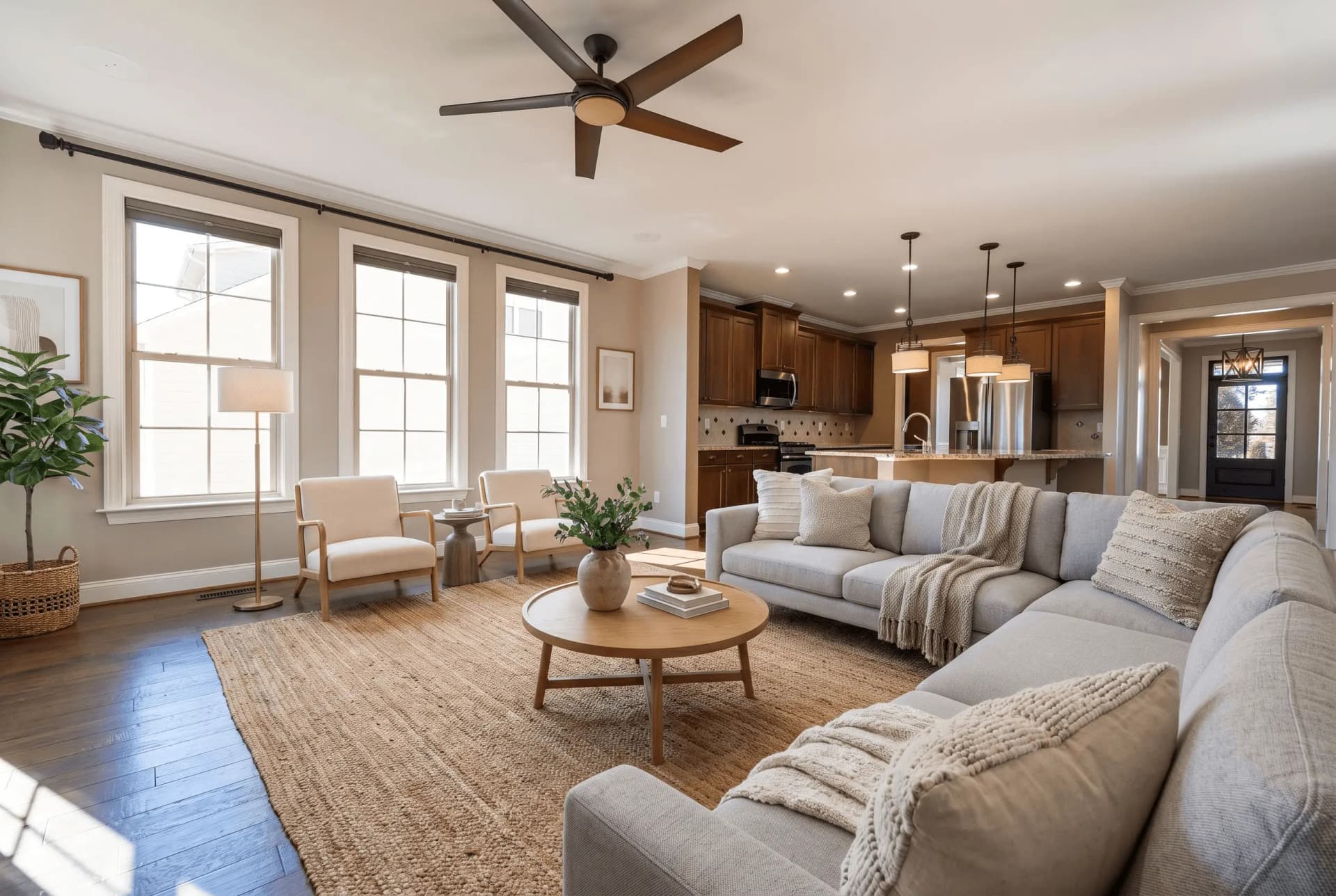 VoorStyling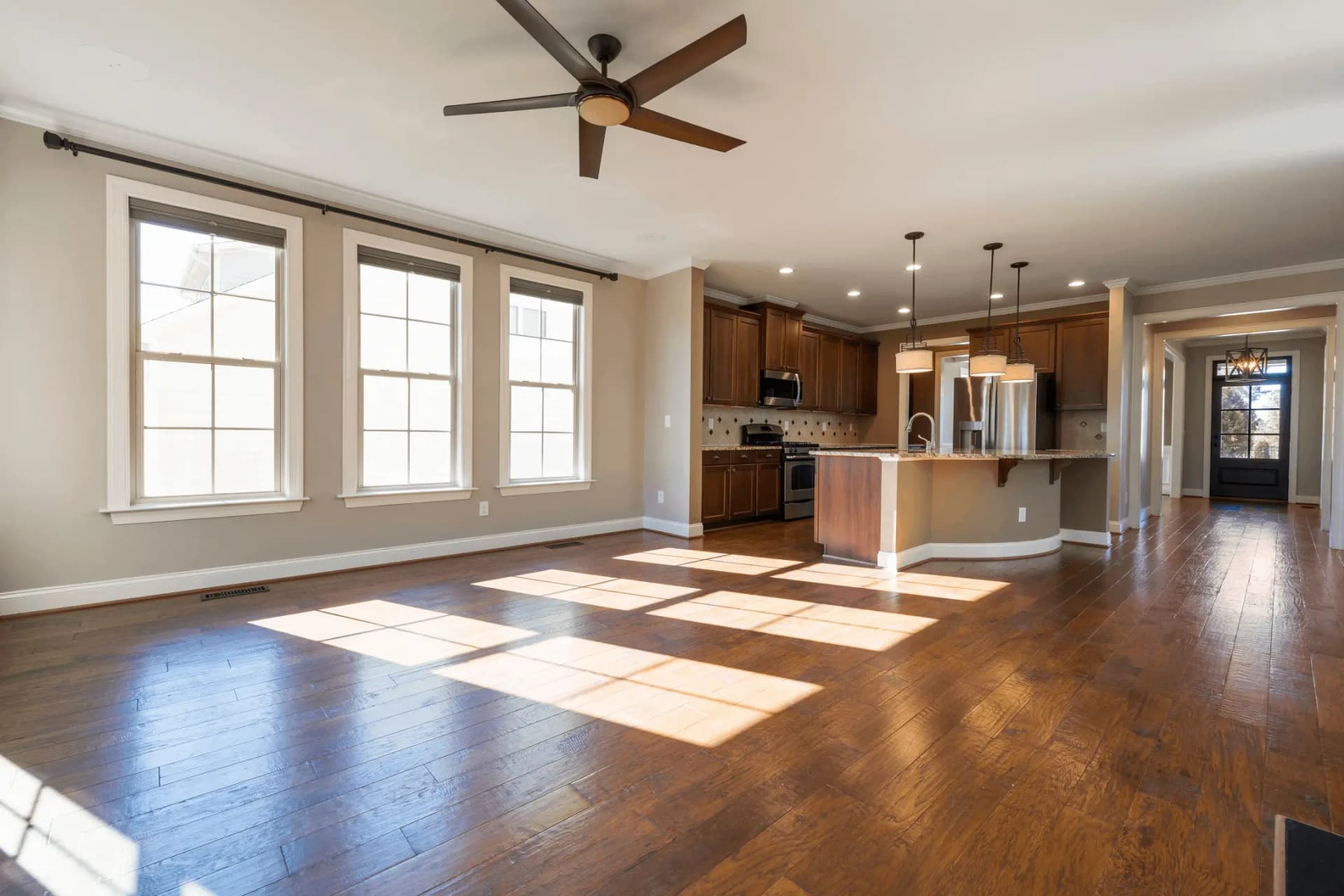
Virtuele Staging
Transformeer lege kamers met AI-gegenereerde meubels
Voor & Na Onthullingsvideo
Maak cineastische onthullingsvideos voor social media
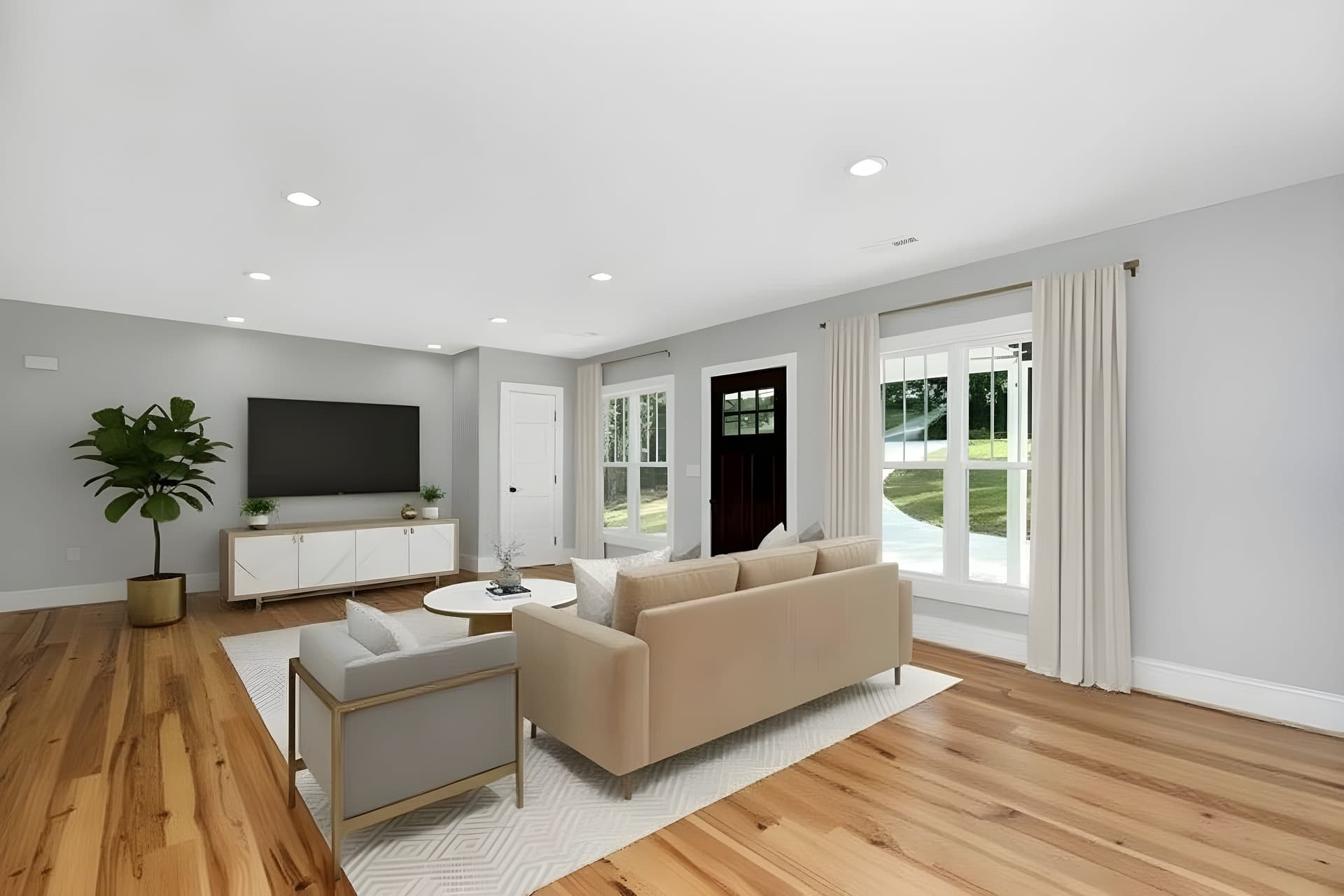 VoorVerbetering
AI Foto Verbeteraar
Verbeter foto's direct met AI
Vastgoed Flyer Maker
Maak printklare vastgoedflyers in seconden
The tour is only as good as the rooms in it.
Every scene is one of your staged photos, so the tour starts where staging ends. Furnish the empty rooms from the photographs you already took, then cut them together in one pass.
Try QuickStaging for free3 gratis credits om te starten, daarna $0.44–$0.60 per foto. Credits verlopen nooit. Bekijk prijzen